

The Rise of Hybrid Offices in Future Work Models
The remote model has been an increasingly adopted way of working since the 1990s and has found a wider application area in recent years, especially with the advances in information and communication technologies. These technological developments have enabled the traditional understanding of doing business to overcome the limitations of space and time, and paved the way for employees to carry out their work from anywhere outside the office.
Thanks to the possibilities provided by technology, teleworking has become more flexible and location independent by separating from other working models. Especially today, it has become extremely easy for employees working outside the workplace to maintain their work processes in communication with managers and to monitor their performance.
The Impact of the Covid-19 Pandemic is Huge
The Covid-19 pandemic, which emerged at the end of 2019, has deeply affected both economic and social life, causing activities in many areas to come to a standstill. Due to the restrictions imposed by the pandemic, remote working has become a necessity for both the private sector and public institutions. Remote working, which has become widespread during the pandemic, has also become a remarkable choice for employers as it offers the potential to reduce costs.
Remote working, which was initially adopted as a solution out of necessity, has become more accepted over time as it offers employees the opportunity to organize their working hours at home according to their needs. Especially for employees who have responsibilities such as child or elderly care at home, telecommuting has been seen to provide significant advantages.
Internet technology and communication tools have also played an important role in the acceptance and spread of this working model. In this way, employees can fulfill their duties in different places outside the office, and managers can monitor and evaluate staff performance with the tools offered by technology. This also makes it possible for employees to take responsibility for their tasks more clearly.
Remote Working Models

The remote working model is divided into three as Fully Remote Working, Partially Remote Working and Hybrid Model.
1- Fully Remote Working: In this model, all employees carry out their work remotely and usually the organization does not have a physical office. Employees may occasionally come together for socializing, but there is no permanent gathering space. This model is especially preferred in business areas that want to save on office costs and are suitable for remote working.
2- Partially Remote Working: In this model, employees work remotely a few days a week as determined by managers. By coordinating between teams or project groups, the units create their own working order. Employees are prepared for remote working and supported with the necessary training. Working hours and days can be determined by the management or planned by consensus among employees.
3- Hybrid Model:
The hybrid model combines remote and office work patterns. Some of the employees work from the office all the time, while others work mainly remotely. The flexible nature of this model allows employees to create a work pattern that suits their individual needs. However, attention needs to be paid to social dynamics, such as the risk of remote workers feeling isolated or the tendency of office workers to compare their working conditions.
Advantages and Disadvantages of Remote Work
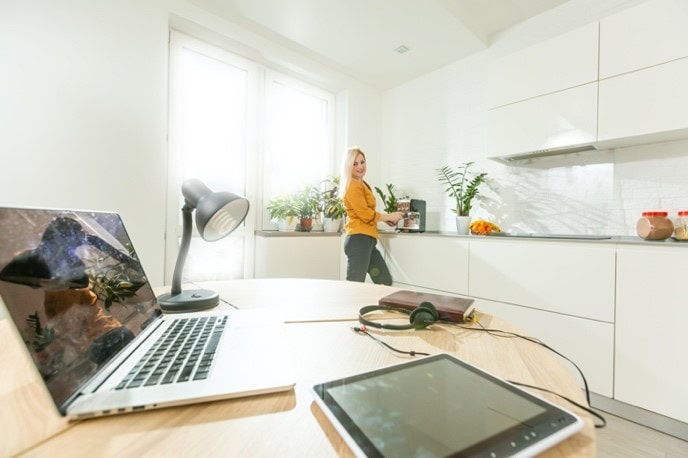
One of the most important advantages of remote work is that employees can flexibly organize their own schedules. This flexibility allows them to establish a balanced relationship between work and private life. The hybrid working model supports socialization by offering employees the opportunity to work from the office and home, while making it easier for individuals to manage their time. This model provides an organized workflow without chaos and increases employee motivation.
However, teleworking also has several negative aspects. Particularly, for women employees, increased burdens such as housework and childcare, alienation from the social environment, loneliness and decline in social skills, technical glitches and insufficient support, stress and family conflicts due to lack of socialization, longer working hours and irregular breaks are some of the disadvantages.
Telecommuting can make organizational learning more difficult and monitoring employee performance more difficult. Reduced social interactions can lead to alienation among employees. However, the office working days provided by the hybrid model can reduce such negativity. Employees’ communication with their colleagues and direct interaction with their managers can boost their morale and motivation and increase their commitment to the workplace.
In conclusion, teleworking models offer advantages and disadvantages at both individual and organizational levels. Effective management and strategic planning can maximize the positive aspects of these models while minimizing the disadvantages.
The Relationship Between Remote Working Models and Employee Performance

Performance is directly related to the degree to which individuals achieve their goals. The difference between what an employee should do in his/her job and what he/she actually does determines the level of performance (Başaran, 2000). Performance is measured by the rate of fulfillment of tasks in accordance with established standards and the goals achieved in this process.
The success of an organization largely depends on the individual performance of its employees. Employees who exhibit high performance strengthen their emotional bonds with the organization and increase their motivation. By increasing employee performance, businesses both facilitate the achievement of their goals and increase their competitiveness. At this point, economic and social motivation factors play a major role.
There are many factors that determine the performance of employees. Some of these factors are as follows:
– Skill and Education Level: The knowledge and skill level of the employee directly affects job performance.
– Personal Characteristics: Characteristics such as determination, leadership skills and the ability to cope with stress contribute to performance.
– Management Policies: A fair management approach increases employee satisfaction and performance.
– Motivation and Working Conditions: A good work environment and motivating factors increase performance.
– Career Opportunities: Providing employees with opportunities for development and promotion increases commitment to the organization.
– Feedback and Reward Systems: Giving regular feedback to employees and rewarding their achievements positively affects motivation and performance.
– Human Relations: Positive relationships within the organization support teamwork and productivity.
In recent years, telecommuting models have been an area of research that has attracted attention on how they affect employee performance. Flexible working conditions can facilitate employees’ work-life balance and increase motivation. However, for this model to be successful, the right tools and processes need to be in place. For example, monitoring employee performance, providing regular feedback and emphasizing motivational elements are important in remote working.
In conclusion, employee performance is the key to business success. To improve performance, it is critical to develop strategies tailored to individual needs and to make the work environment supportive.